Health and Human Services Secretary RFK Jr. said he was “not particularly happy” with Donald Trump’s recent executive order supporting the controversial herbicide glyphosate. Kennedy recently offered a more nuanced take than his earlier public defense of the president’s move.
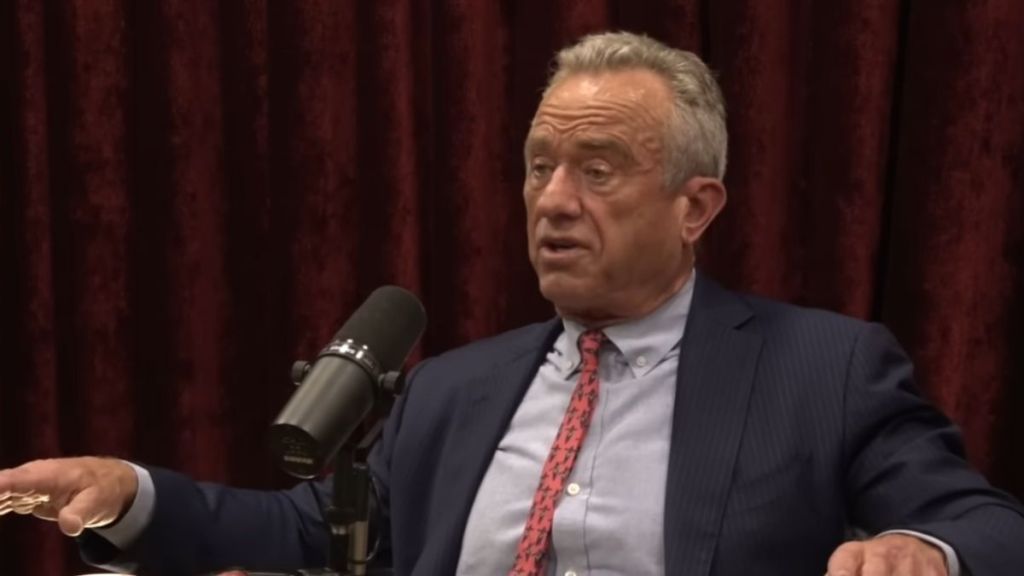
RFK Jr. talks to Joe Rogan about Donald Trump’s decision
Speaking in an interview with The Joe Rogan Experience host, podcaster Joe Rogan, RFK Jr. addressed Donald Trump’s order, which bolsters protections for pesticide companies over glyphosate, a widely used herbicide. While he stopped short of outright criticism, he made clear that he had reservations. “It’s not a good thing to have in your food so … it’s not something that I was particularly happy with. Let me put it that way, mildly.”
The admission is a major shift in tone from the nation’s top health official. While Kennedy has built a following by railing against pesticides and chemicals in the food supply, he finds himself navigating the political realities of serving in an administration led by Donald Trump, whose priorities sometimes clash with the health secretary’s long-held positions.
While unhappy with the policy, he also acknowledged the broader economic implications of a sudden ban. “But I also understand the president’s point of view,” Kennedy explained. “If you ban glyphosate overnight, or if you got rid of it … it would destroy the American food system.”
Trump’s order, which provides pesticide companies with “immunity” regarding glyphosate, has received backlash from the MAHA movement. Its supporters had aligned with Kennedy and expected tougher stances on food safety. Thousands of lawsuits have alleged glyphosate’s link to cancer. Bayer, which acquired Roundup-maker Monsanto, maintains the chemical is safe and recently announced a settlement agreement with plaintiffs.
Kennedy’s public comments to Joe Rogan stand in contrast to his more diplomatic social media defense just days earlier. On Sunday night, he posted on X: “I support President Trump’s Executive Order to bring agricultural chemical production back to the United States and end our near-total reliance on adversarial nations.”